
General Assembly 2026: Members confirm Prokon eG’s course
The virtual General Meeting 2026 of Prokon eG showed that, even in a challenging market environment, the cooperative remains economically stable – and its members are actively helping to shape its future direction. The focus was on the 2025 annual financial statements, the payment of a dividend, new opportunities for action for renewable energy projects, and discussion about the future of the cooperative.

On 13 June, the members of Prokon eG came together for the virtual General Assembly. The meeting was marked by intensive debate, clear resolutions and a shared look ahead. Despite one of the wind weakest years of the past two decades, Prokon achieved a net annual profit of 6.1 million euros in 2025. The members approved a dividend of 2.15 per cent. In total, around 5.5 million euros will be distributed to members.
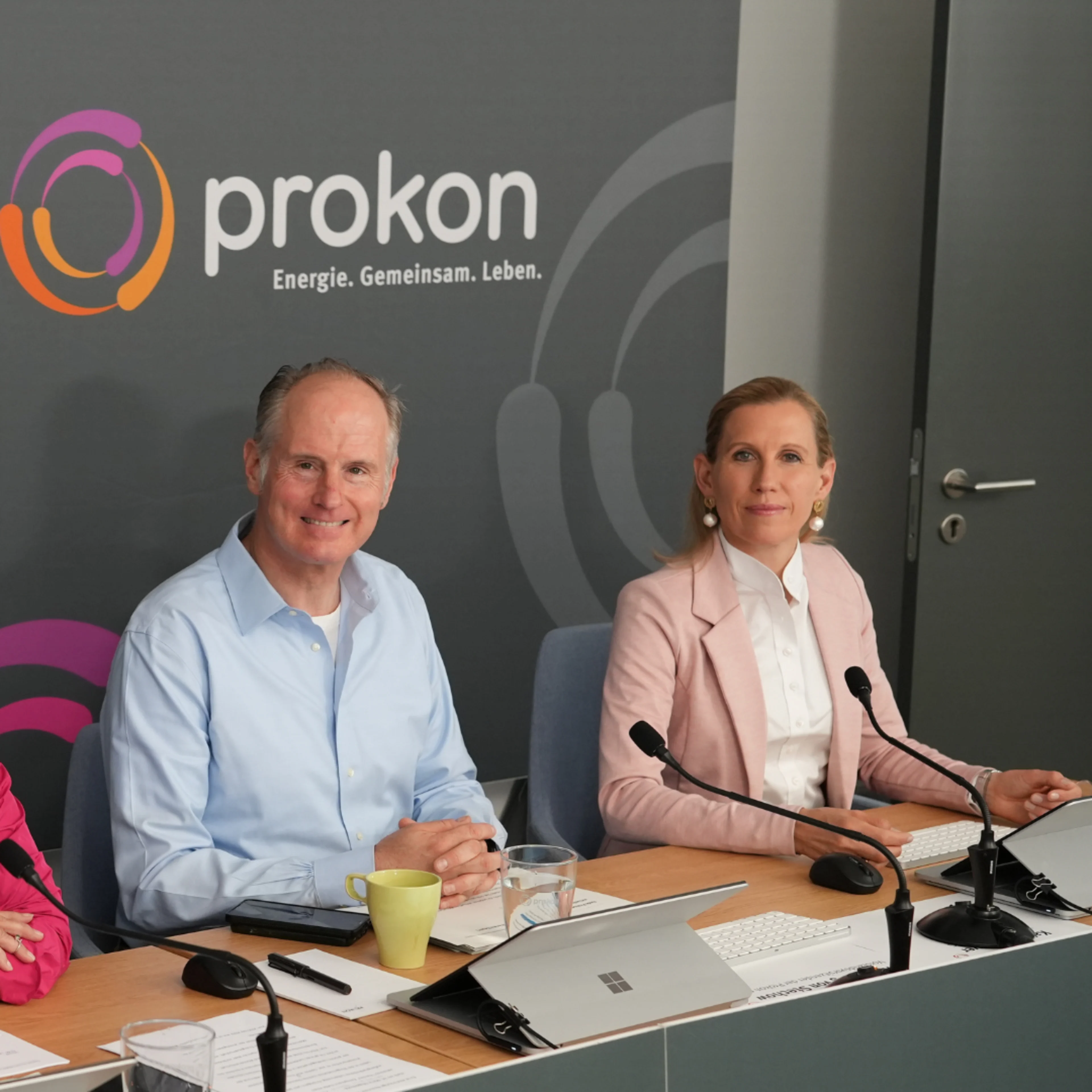
“2025 was not an easy year for wind energy,” said Chief Executive Officer Henning von Stechow. “That makes the message all the more important: Prokon is in a stable economic position. We were able to achieve a positive result, strengthen our equity base and pay our members a dividend.”
Exchange, participation and clear decisions
The General Meeting is the highest decision-making body of the co-operative – and therefore the place where members make direct decisions on key matters concerning their Prokon eG. In addition to approving the 2025 annual financial statements and granting discharge to the Management Board and Supervisory Board, members also approved important authorisations to raise credit under Section 49 of the German Co-operative Societies Act (GenG).
These resolutions create important scope for action in the years ahead. They do not replace financing, but they provide a basis for examining new financing concepts and for keeping a larger share of the company’s own project pipeline in co-operative hands in the long term. In this way, the members support the strategy of developing, financing and operating new renewable energy projects ourselves wherever possible.
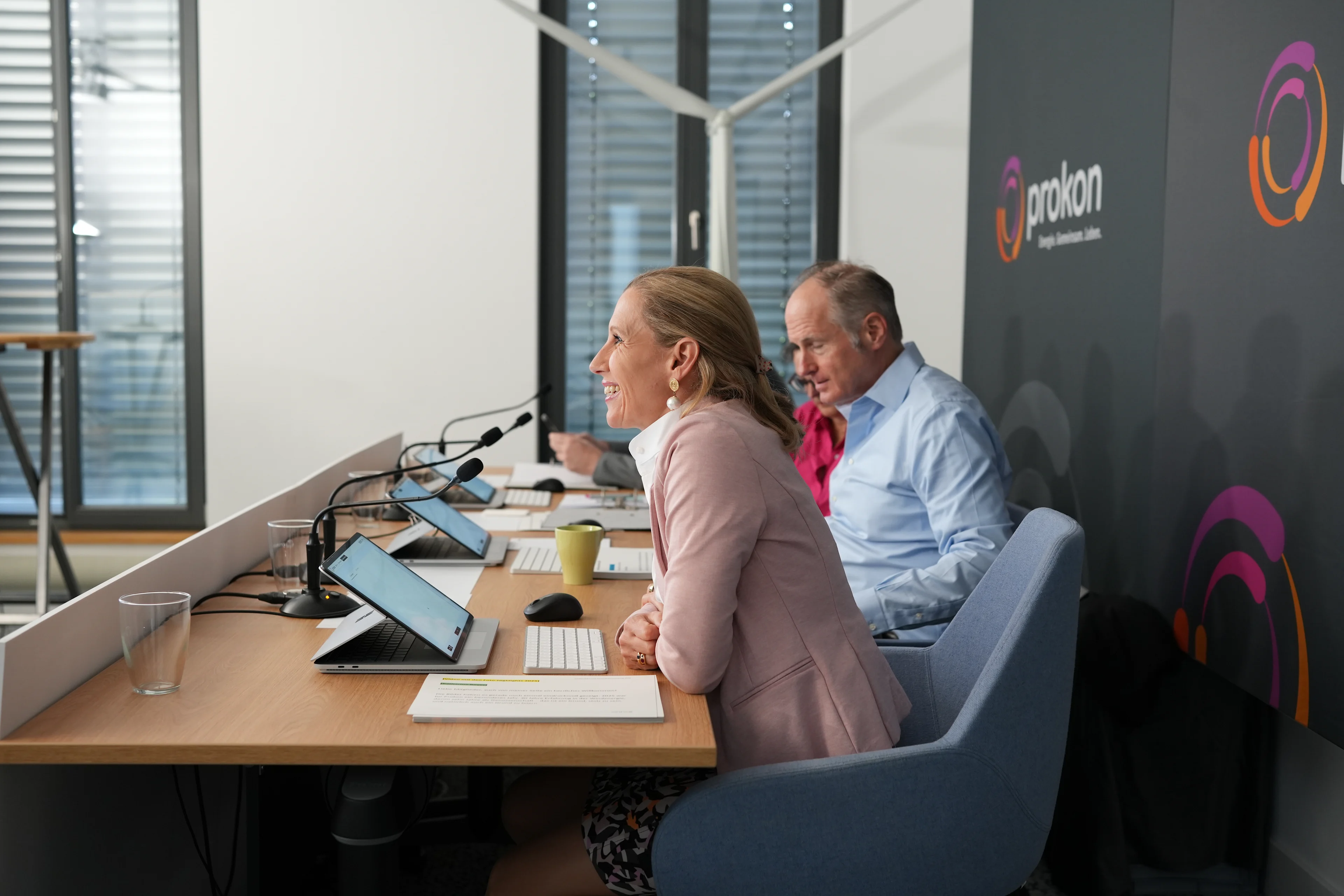
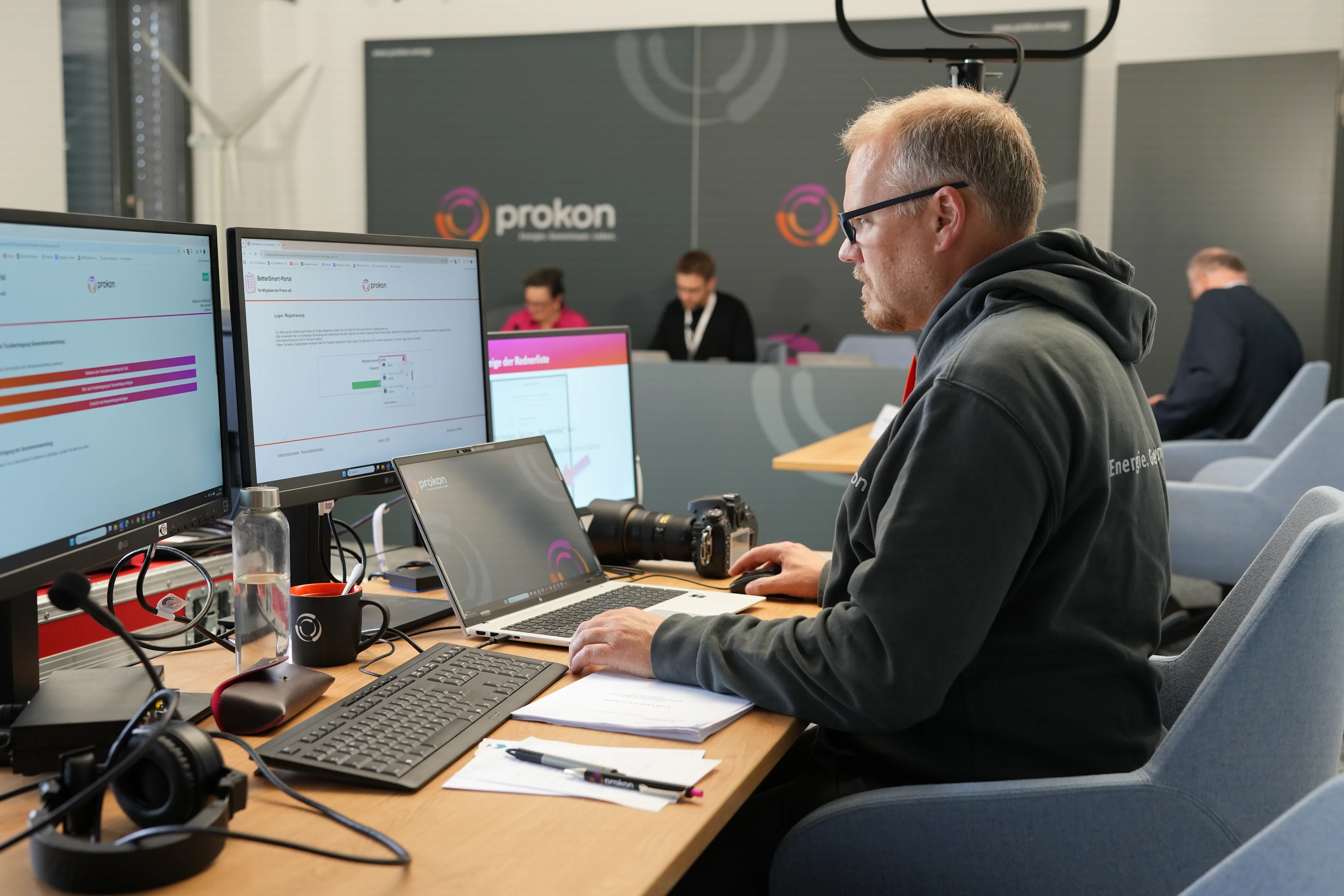
The general debate also took up a great deal of time. Members used the meeting extensively to ask questions, share assessments and discuss matters with the Management Board and Supervisory Board. The discussion covered not only financial figures, but also internal collaboration, the cooperative’s дальнейшее development, energy policy framework conditions and Prokon’s future prospects.
A cooperative lives on the trust of its members
By the end of 2025, Prokon had 41,558 members. Share capital rose to €266.4 million, and the equity ratio improved to 52.7 per cent. This development shows how important the broad membership base is for the co-operative’s stability.
“The trust of our members is the basis of our work,” said board member Katharina Beyer. “Especially in an economically and politically demanding environment, the strength of our co-operative model becomes clear: long-term thinking, collective participation and the willingness to actively help shape the energy transition.”
The virtual general meeting also made clear that participation comes in different forms. With up to 340 participants connected live, attendance was higher than at the in-person event in Brunsbüttel the previous year. The digital format makes it easier for many members to take part without the need to travel. At the same time, personal exchange remains an important part of the co-operative idea. That is why Prokon will continue to rely on complementary event formats in future, allowing members to experience their co-operative on site and to talk with one another.
Tailwind for renewable energy in citizens’ hands
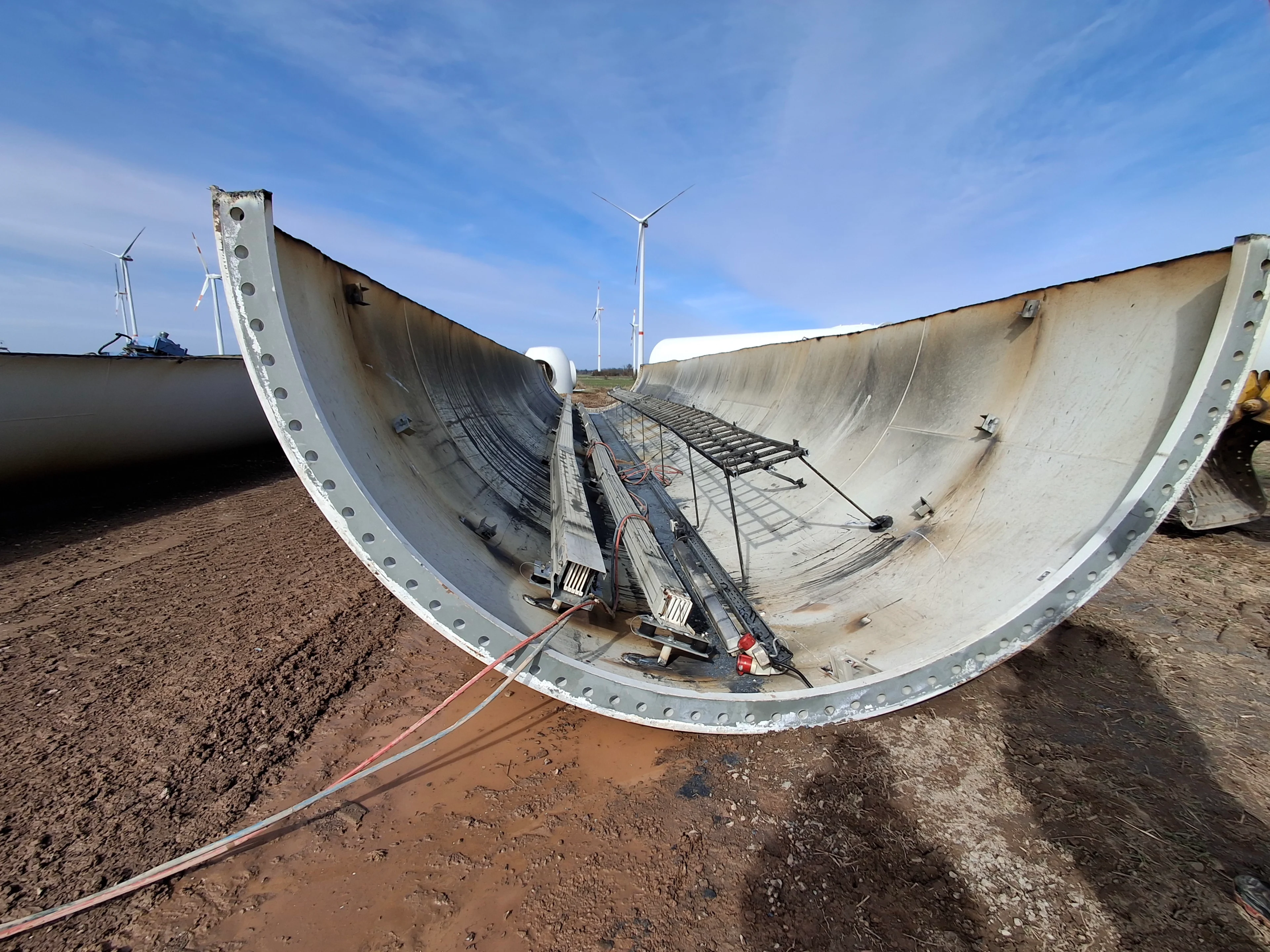
Strategically, Prokon continues to rely on a combination of its own renewable electricity generation, project development and construction, energy trading, operations and maintenance, as well as international activities. Over the past year, Prokon received approvals for wind energy projects with a total capacity of 131 megawatts and secured EEG subsidies for a further 124 megawatts. Repowering is also moving more into focus: in Fleetmark III, eight modern turbines are set to replace eleven older wind turbines.
Looking ahead to the coming years, the Board made it clear that the framework conditions for renewable energy must remain reliable. Volatile electricity markets, grid bottlenecks, rising costs, complex approval procedures and political uncertainty are making long-term investment decisions more difficult.
“The power system will not become cheaper if renewables are held back,” said Henning von Stechow. “We need reliable framework conditions that think renewables, grids, storage, digitalisation and flexibility together.”
The 2026 General Meeting showed that Prokon is in a sound economic position, remains strategically focused on expanding renewable energy, and is supported by an active membership. In this way, the cooperative continues to shape the energy transition in citizens’ hands – collectively, for the long term and with a clear view to the future.