
Prokon mit klaren Forderungen in Berlin
Yesterday, around 250 representatives from politics, the energy sector, and the cooperative network gathered in Berlin for the Federal Congress on the Cooperative Energy Transition organised by the DGRV. Despite political uncertainties and stalled energy policy debates, one thing became clear: the energy transition remains a central issue for the future – especially with regard to reliable funding conditions and planning security for renewable energies.
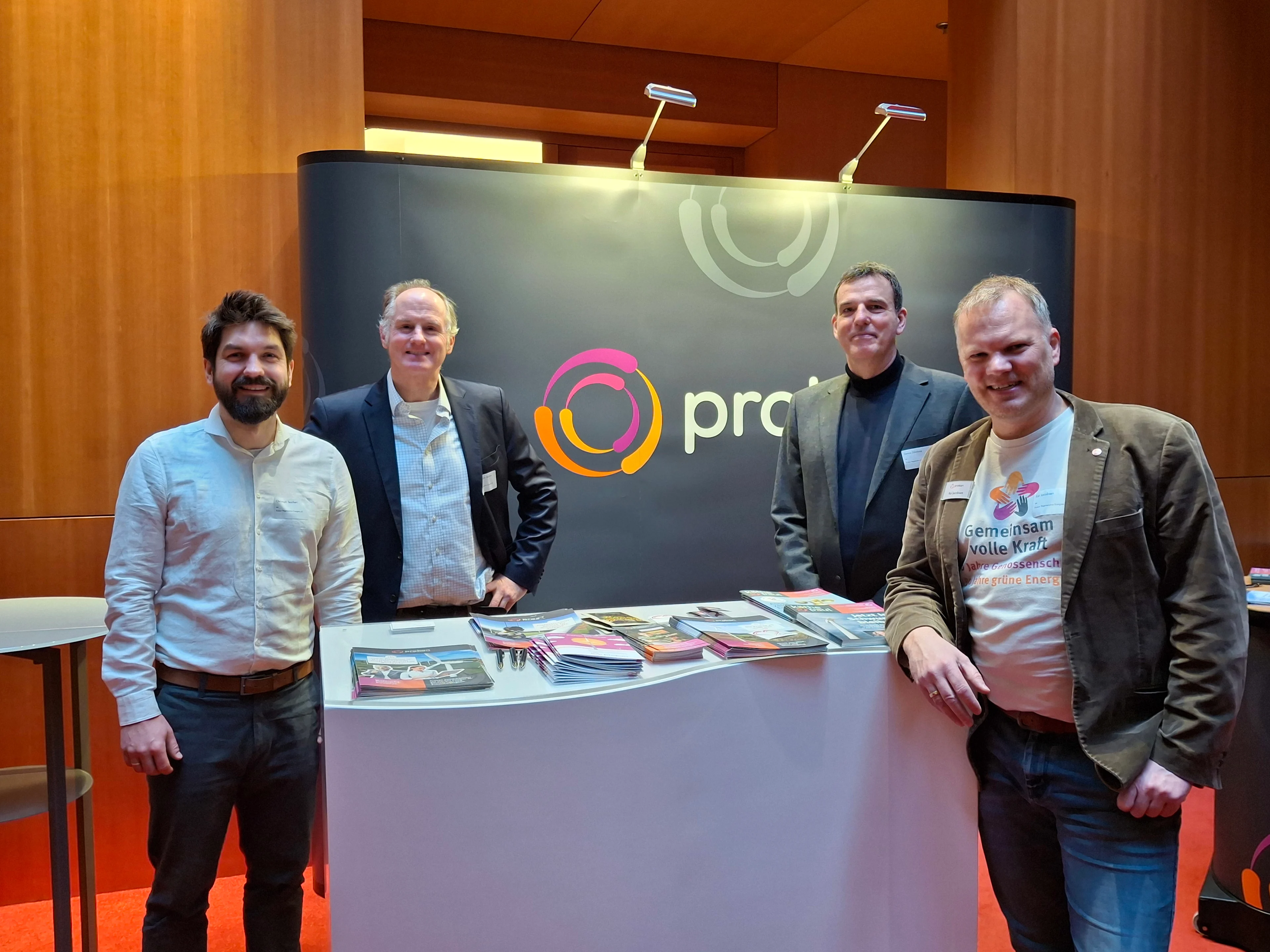
Prokon was represented on site with concentrated energy. With our Chairman of the Board, Henning von Stechow, and Christoph Teuchert, Head of Members & Energy, we actively contributed to the programme with two content-focused presentations. Our stand also provided plenty of space for exchange and networking with key players in the cooperative energy transition. Numerous Prokon members, advisory board members, as well as the Deputy Chairman of the Supervisory Board, Rainer Doemen, also attended the congress and contributed to the discussions with their questions.
Planning certainty as the key to expanding renewable energies
In the keynote speeches, Ursula Heinen-Esser (BEE), Dr Julia Verlinden (Alliance 90/The Greens), and Henning von Stechow, among others, emphasised the importance of clear political frameworks for the energy transition. Heinen-Esser criticised the slow progress of the EEG reform and called for reliable prospects for the renewable energy sector. Julia Verlinden highlighted the role of energy cooperatives and citizen-led energy initiatives in promoting acceptance, decentralisation, and democratic participation.
In his reply, Henning von Stechow focused on the perspective of companies in the energy transition. His central point: planning certainty. By 2027 at the latest, a new support scheme for renewable energy that complies with EU state aid rules must be in place. However, it is still unclear how this will be specifically structured. For developers and operators, this means high investments with a lack of reliability.
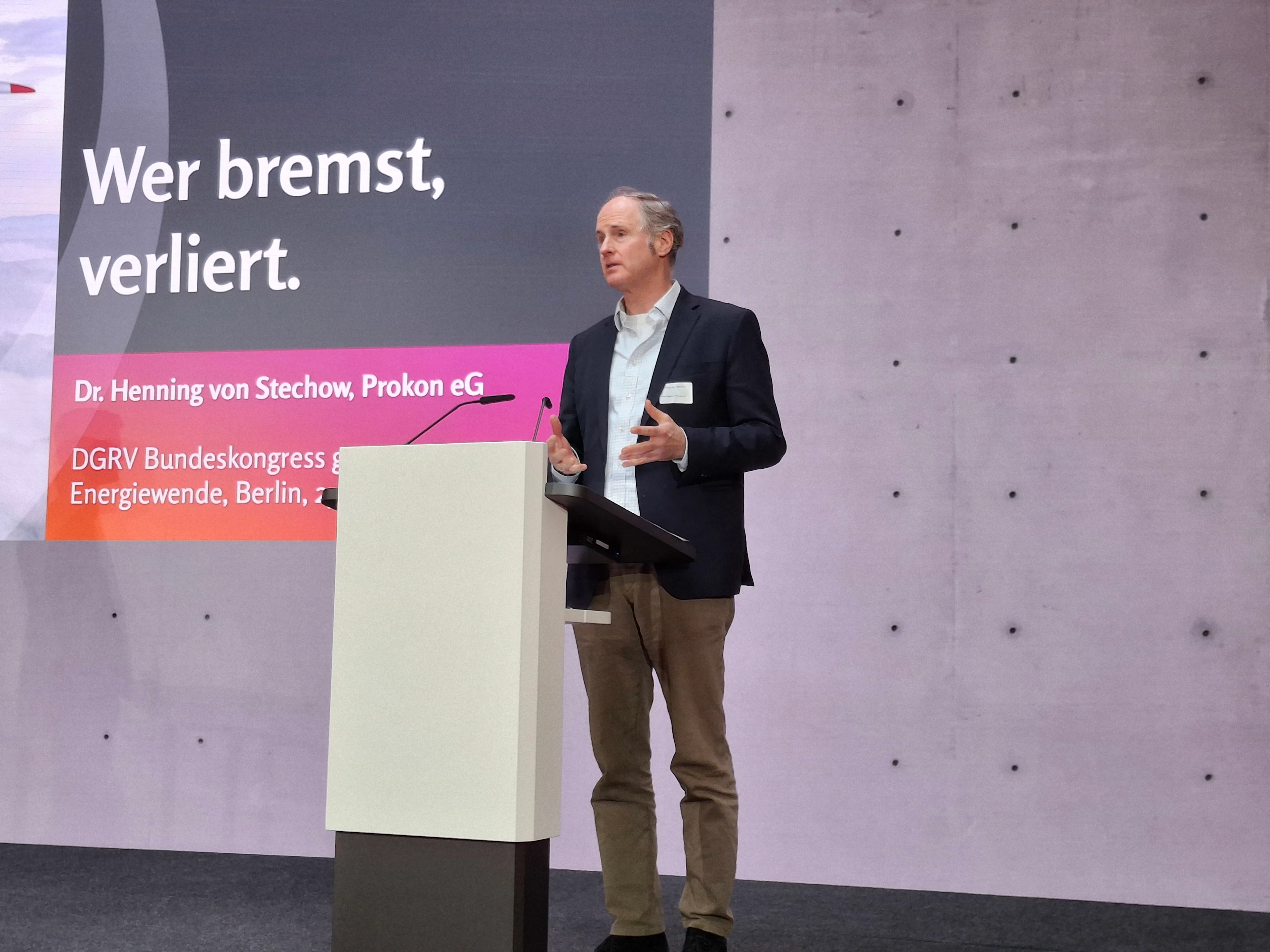
Rede Henning von Stechow DGRV-Bundeskongress
His clear demand to the Federal Government: swift clarity on the future support for renewable energies.
In doing so, he advocated for focus and speed instead of overly complex holistic solutions. He particularly emphasised three aspects:
Renewable energies require a long-term, economically viable business case.
Cost reductions are the greatest lever for a successful energy transition – especially through grid expansion, digitalisation, and flexibility.
Acceptance is created through genuine participation, above all through cooperative models and citizen energy.
At the same time, von Stechow warned that public support for the energy transition is declining. It is therefore all the more important to communicate renewable energies as an economic, social, and security policy necessity.

Transparency instead of balance sheet promises: Renewable energy in real time
A highlight of the congress was the innovation showcase featuring six pioneering projects from the cooperative energy sector. Here, Prokon – represented by Christoph Teuchert – presented the project “Echt Grün”.
In his keynote, Teuchert emphasised the importance of transparency and honesty in the electricity market. Instead of promising “100 percent green electricity” purely on a balance sheet basis over the year, simultaneous generation and consumption of renewable energy must be made visible. This is because wind and solar energy are fluctuating and not always available.
Using the example of the Prokon Wind Power Business PPA, he demonstrated how generation and consumption can be aligned in time. Customers cover their electricity needs at a fixed price, while Prokon takes on residual trading and system responsibility. This creates transparency about when electricity from renewable sources is available – and when the energy system requires additional support.
The audience selected Solarwärme Bracht eG, with its heat supply concept achieving over 70 percent solar coverage, as the winner of the innovation showcase. Other projects on energy districts, direct marketing, and cooperative partnerships also attracted great interest.
Shaping the energy transition together
To conclude, experts discussed the future of renewable energy support from 2026 onwards, as well as the challenges facing energy cooperatives. In addition to the substantive debates, the congress offered numerous opportunities for exchange, networking, and political dialogue.
Particularly positive was the growing presence of young and female actors in the cooperative energy transition, as well as the direct dialogue with political decision-makers. Numerous members of the Prokon cooperative were also present and actively participated in the discussions. Rainer Doemen, Deputy Chairman of the Supervisory Board, contributed his own statements and engaged in technical and political exchange, representing the positions of the members.
Conclusion: The energy transition needs speed, transparency, and genuine participation. Prokon, together with strong partners and a committed membership, is working towards a successful cooperative energy transition.


