
Claudia Kemfert on the energy policy of the Federal Government
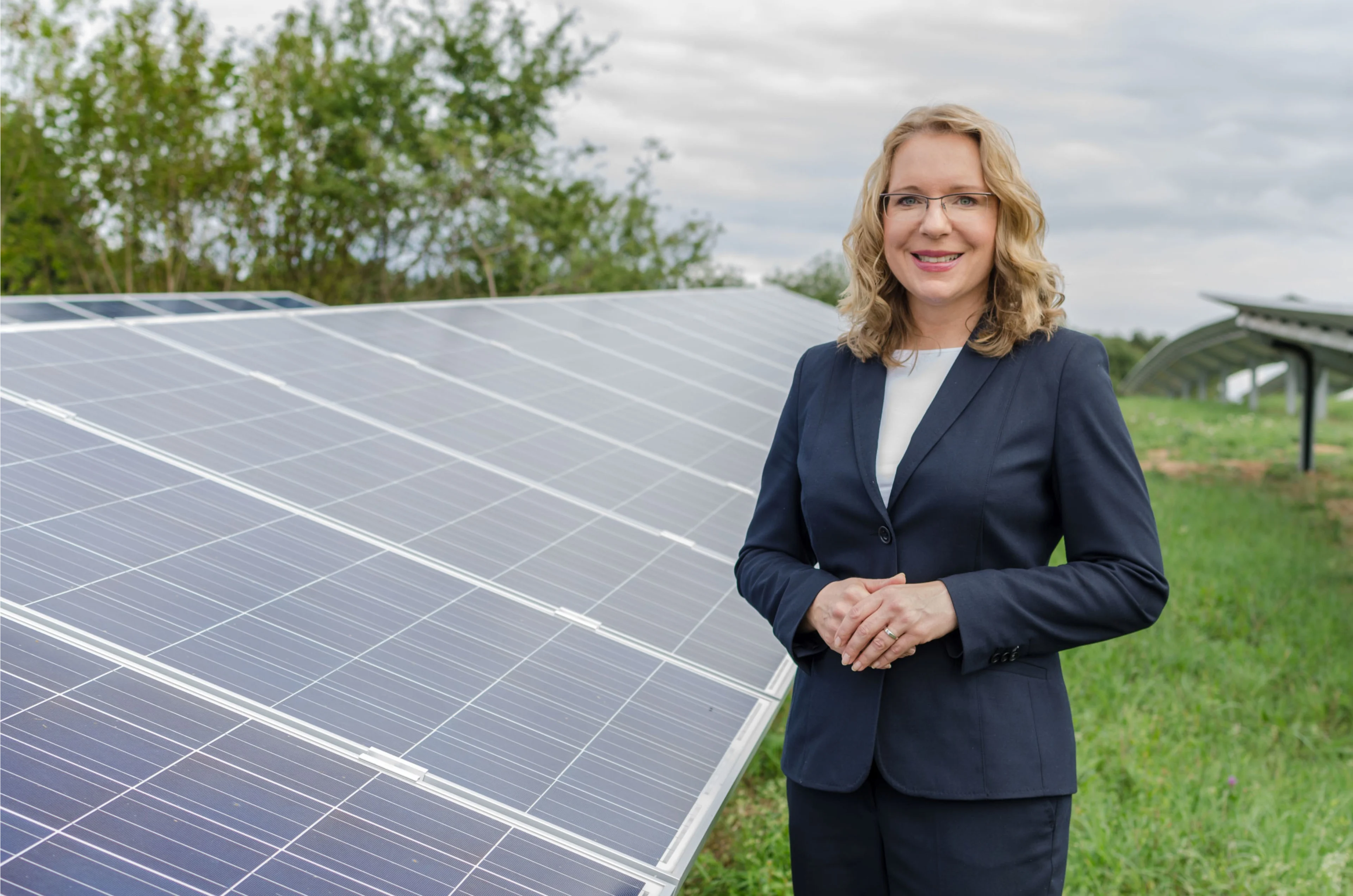
The expert Prof. Claudia Kemfert has been heading the Department of Energy, Transportation, Environment at the German Institute for Economic Research in Berlin since April 2004. She criticises the energy policy of the federal government and calls for a flexible architecture of the electricity system.


Käthe & Paul: Since the black-red federal government took office, support for renewable energies seems to be crumbling. How do you assess this?
Claudia Kemfert: Unfortunately, we are currently witnessing a clear backward step in energy policy. Instead of consistently advancing the expansion of renewables, outdated fossil fuel structures are being stabilised. This is short-sighted both economically and ecologically. Investment security can only be achieved if politics sends out clear, long-term signals. Anyone now reverting to fossil-based bridging technologies is squandering the trust of industry, municipalities and citizen energy projects that have long since invested in the energy transition.
K & P: Construction of more gas-fired power plants, promotion of CO₂ storage (CCS), €2.5 billion for nuclear fusion – in your view, is this the right direction?
Kemfert: No. This is an energy policy dead end. New gas power plants or CCS projects are expensive, inefficient, and distract from the real solutions. We need flexible storage, intelligent control systems, and sector coupling – not new fossil dependencies. And when it comes to nuclear fusion, we’re talking about a technology that may not play a role for decades. But what matters for the climate is the next decade. Every euro spent today on renewables, efficiency and storage has an immediate effect and generates local economic value.
K & P: The current monitoring report projects a significantly lower electricity demand in Germany for 2030. Is that realistic despite industrial transformation, electric mobility, heat pumps, and green hydrogen?
Kemfert: That is completely unrealistic. If we seriously want to decarbonise, electricity demand will increase significantly – by 30 to 50 percent. This electricity must come from renewables. Lower forecasts lead to mismanagement: too few wind turbines, too little solar energy, insufficient willingness to invest. Politics should instead rely on scenarios that realistically reflect the transition of industry and households.
K & P: Minister Reiche believes that there is a need to catch up particularly in terms of efficiency when it comes to renewables. Does she have a point?
Kemfert: Of course, efficiency is important, but the main bottleneck isn't there. It's bureaucracy, lack of available land, and unclear regulatory conditions. Many projects don't fail due to a lack of efficiency, but because of permits, grid connections, and political uncertainty. Efficiency is no substitute for speed in expansion.
K & P: Stichwort Dunkelflaute: Die Windenergie hat tatsächlich ein recht schwaches Halbjahr hinter sich. Wie groß ist das Problem für die Energieversorgung?
Kemfert: Dunkelflauten sind ein bekanntes Phänomen – aber kein unlösbares Problem. Entscheidend ist, dass wir ein System der Vielfalt aufbauen: Wind + Solar + Speicher + Lastmanagement + europäische Vernetzung. Wenn Sonne und Wind schwächeln, springen Speicher, Wasserkraft oder flexible Verbraucher ein. Einzelne Halbjahre sagen wenig über die Stabilität des Gesamtsystems. Wichtig ist die Gesamtarchitektur – und die funktioniert nur mit Erneuerbaren, Speicher, digitaler Steuerung und intelligenter Netzführung.
K & P: Brauchen wir als Puffer viele neue Gaskraftwerke oder gibt es Alternativen?
Kemfert: Wir brauchen flexible Kapazitäten, ja – aber die müssen klimaneutral sein. Batterien, Wärmespeicher, Pumpspeicher, Biogas und perspektivisch grüner Wasserstoff können diese Rolle übernehmen. Neue fossile Kraftwerke wären teure Fehlinvestitionen, die bald wieder stillgelegt werden müssten. Sinnvoller ist es, bestehende Anlagen schrittweise umzurüsten und gleichzeitig dezentrale Speicher, Smart Grids und virtuelle Kraftwerke zu fördern, die Angebot und Nachfrage intelligent ausgleichen.
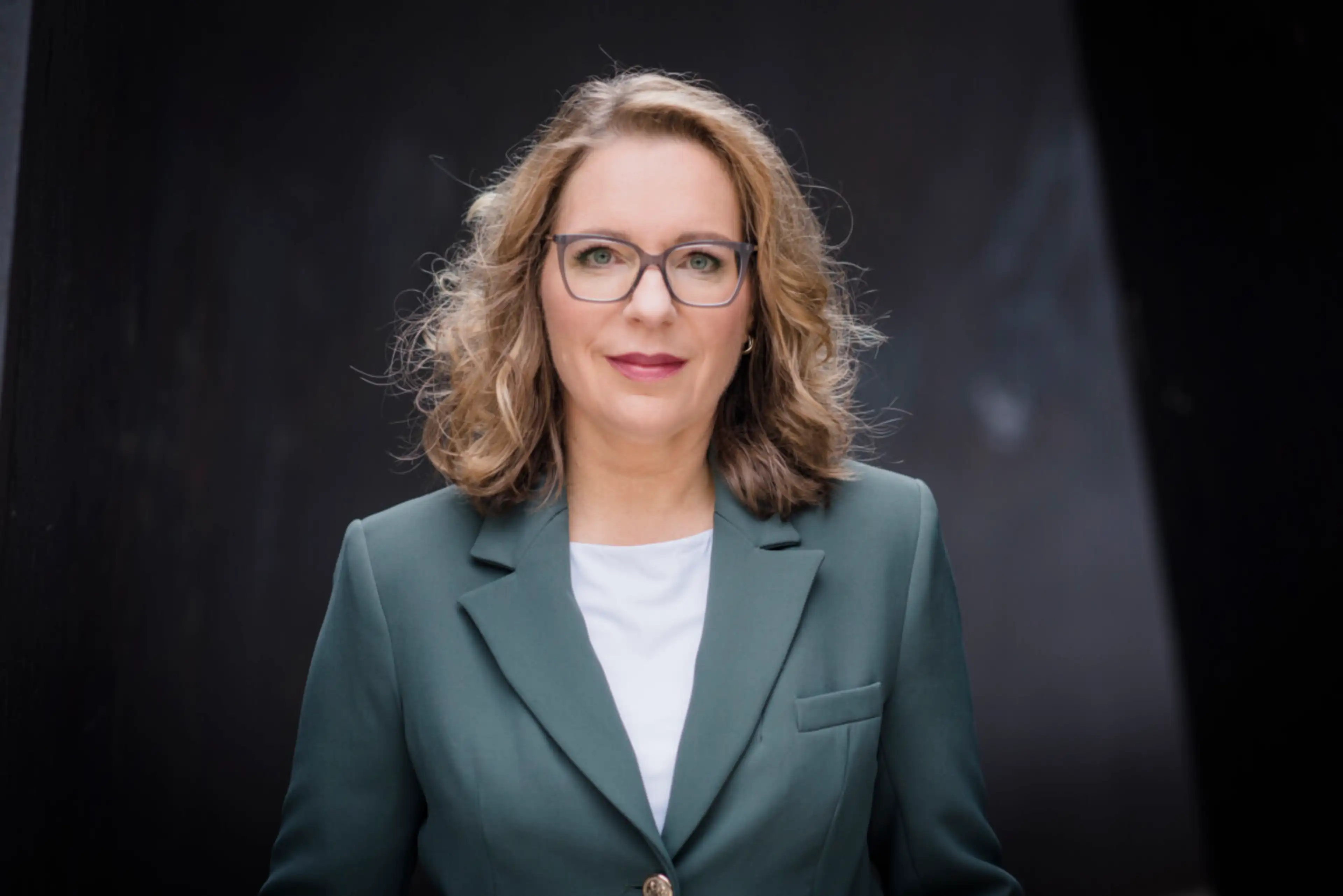
"Many projects do not fail due to a lack of efficiency, but rather because of lengthy approval processes, missing grid connections, and political uncertainty."
Claudia Kemfert, Head of the Energy, Transport, and Environment Department at the German Institute for Economic Research
K & P: Rising costs, worsening tender conditions – and increasingly, wind farm operators have to build their own substations. Now, according to Minister Reiche, they should also “assume more system responsibility”, i.e. for example, pay for grid connections. How is that supposed to work?
Kemfert: That is the wrong approach. The operators are already making an enormous contribution – financially, organisationally, and socially. If they are burdened even further, it jeopardises investments. System responsibility must be distributed fairly: grid operators, policymakers, and energy companies must work together to find solutions. We need a solidarity-based infrastructure funding model and targeted deployment of digital control technologies – not further privatisation of risks.
K & P: The Minister is calling for a better synchronisation between the expansion of renewables and the grid. But instead of accelerating grid expansion, could that also mean slowing down renewables? Is the 80-percent target still achievable?
Kemfert: Only if we accelerate, not slow down. Anyone using synchronisation as a pretext to delay projects is putting the 80-percent target at risk. We must drive both forward in parallel: modern grids, digitalisation, and regional flexibility. Smart grids, smart meters and virtual power plants can help manage electricity flows more effectively and avoid bottlenecks – without slowing the expansion. Digitalisation complements but does not replace grid expansion, while making it more efficient and faster.
K & P: Climate change has somewhat faded into the background in public debate. That affects the acceptance of renewables. In your view, what role does “citizen energy” play – that is, public participation through cooperatives and the like?
Kemfert: A crucial one. Citizen energy creates acceptance, participation, and local value creation. When people see wind turbines or solar panels in their region generating jobs, strengthening the community and lowering electricity costs, support grows. Citizen energy is the backbone of the energy transition. It turns anonymous projects into a community effort – and through that, transforms resistance into new energy.
K & P: What political measures would help in the short term to create planning security for operators?
Kemfert: Firstly: reliable and long-term tendering conditions, less bureaucracy and clear grid connection commitments. Then: a reform of the levies and surcharge system so that storage and flexibility solutions can become economically viable. Municipalities must also be more involved – both financially and in planning. And finally, there must be a consistent priority for renewables – in planning law, land allocation, and investment decisions. Digitalisation, transparency and intelligent control systems can further accelerate these processes.
K & P: What do you say to people who claim that the train has already left the station when it comes to climate change, and that Germany is too small to make a difference?
Kemfert: The opposite is true. Every tenth of a degree counts – and every country that leads by example proves that climate protection works. Germany has already shown that an industrial power can succeed with renewables. If we dare to lead again now, we’ll set an example for many other countries. And: taking action is always cheaper than doing nothing. Those who invest today are protecting the climate, the economy, and their freedom at the same time.
Prof. Dr. Claudia Kemfert
She is a Professor of Energy Economics and Energy Policy at the DIW Berlin and Leuphana University. She has been conducting research on the energy transition, climate and economic policy for over 25 years. She is a multi-award-winning scientist, co-chair of the German Advisory Council on the Environment, and a member of the executive committee of the German Chapter of the Club of Rome. She is the author of numerous scientific publications, including several books. Most recently, her books "Shockwaves" and "Unlearn CO2" have been published.