
Meta-study: Renewable energy strengthens the economy and supply security
Are renewable energies a cost factor for the German economy — or an important part of its future competitiveness? A meta-study commissioned by us in February 2026, which is now being published in full, reaches a clear conclusion: a renewable, digital and flexibly managed electricity system can combine affordable energy, security of supply, climate protection and economic strength. However, this requires reliable political framework conditions and a coordinated expansion of generation, grids, storage and digitalisation.
The key finding: an electricity supply based on renewable energies and a competitive German economy are not contradictory. If implemented properly, they can strengthen one another.
Renewable energy reduces dependencies
The expansion of wind and solar energy reduces the need for imported fossil fuels. This strengthens the resilience of our energy supply in the face of international crises and fluctuating prices for oil and gas.
“The sharply rising prices for oil and gas seen recently clearly show that there is no sensible alternative to the energy transition,” says our CEO, Dr Henning von Stechow. “Expanding green electricity generation and switching heating, mobility and industrial processes to electricity strengthen our independence and climate protection.”
Public support for this path also remains high. In a representative YouGov survey, 68 per cent of eligible voters said they were in favour of reducing dependence on oil and gas imports by making greater use of renewable energies and storage.
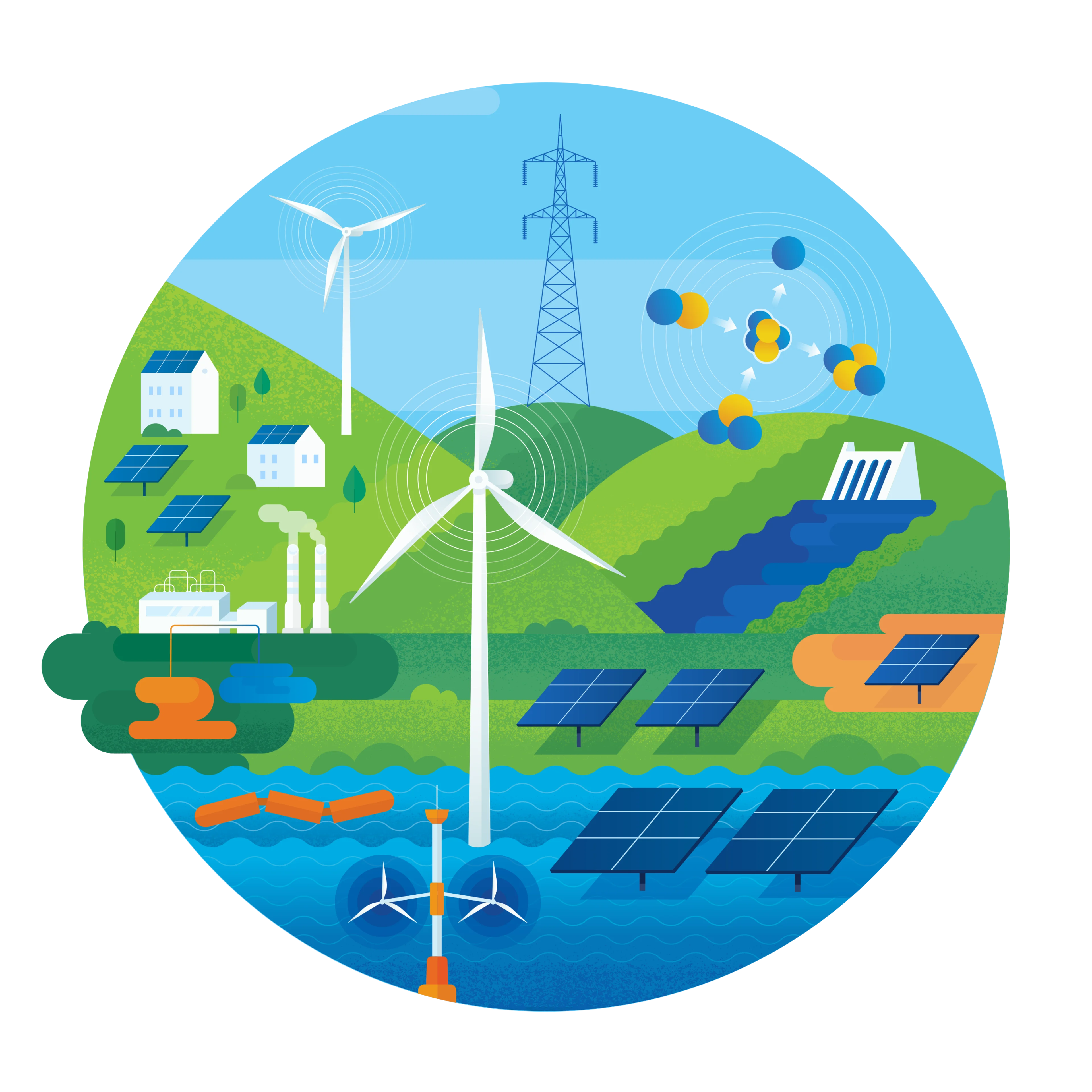

Which advantages the meta-study identifies
The studies evaluated show that renewable energies can reduce wholesale electricity prices. At the same time, they reduce dependence on energy imports and thereby increase security of supply.
However, a rising share of wind and solar power alone is not enough. For the electricity system to function reliably and efficiently, generation and consumption must be better matched. This requires modern electricity grids, storage, flexible consumers and digital control capabilities.
Digital platforms, smart metering systems and energy management solutions can connect many individual systems with one another. Electric cars, heat pumps, battery storage and industrial plants can shift their consumption more towards periods when a lot of renewable electricity is available. This eases pressure on the grids, limits price spikes and can reduce the costs of the energy system.
In addition, expanding a renewable and digital electricity system strengthens value creation and employment in Germany. If people, local authorities and companies are given a financial stake, this also increases acceptance of new energy projects.
Was ein effizientes Stromsystem braucht
The meta-study describes several prerequisites for a high-performance energy system. These include, in particular:
greater flexibility in electricity generation and consumption
a digitalised and intelligently controlled grid infrastructure
a balanced mix of wind power, photovoltaics, storage and flexible power plants
efficient grid expansion and improved shared use of grid connection points
clear expansion targets and reliable legal frameworks.
What is crucial here is not to view renewable energy, grids, storage and demand separately. A cost-efficient system only emerges when all areas are planned and developed together.
Planning certainty is also important for industry. Companies will only invest comprehensively in electrification and climate-friendly production processes if sufficient green electricity is available at competitive prices in the long term.
Political plans are causing debate
Currently, policymakers are discussing how the expansion of renewable energy can be better aligned with available grid capacity. One proposal would classify particularly heavily loaded grid areas as capacity-limited. Operators of new wind and solar installations there could be required to forgo compensation for curtailment for up to ten years.
A brief analysis by the consultancy Consentec, commissioned by Agora Energiewende, shows how far-reaching this rule could be. Based on 2025 data, if the threshold were set at three per cent curtailment, around one in four municipalities in the Schleswig-Holstein Netz grid area would be regarded as a bottleneck area. The economic impact could, however, affect significantly more locations: according to the analysis, up to 77 per cent of municipalities could be affected by a de facto ban on new wind and solar projects.
The reason is that, without compensation for possible curtailment, the financial risks for project developers and banks increase. As a result, projects could become harder to finance – even in regions with very favourable conditions for wind and solar energy. In addition, grid bottlenecks can change through grid expansion, storage and flexible consumers, while the classification is intended to apply for several years.
In our view, the solution should therefore not be to impose a blanket limit on the expansion of renewable energy. Instead, grid expansion, storage, digitalisation, flexible grid connections and controllable consumption must be advanced together and more quickly.
“Support for the energy transition is high,” says Henning von Stechow. “For it to succeed, we need a clear commitment to climate targets and reliable regulatory conditions for investment.”

Renewable, digital and collective
The meta-study shows that renewable energies are not just a tool for climate protection. They can also stabilise energy prices, reduce dependence on imports and create new economic opportunities.
The prerequisite is an electricity system that intelligently connects generation, grids, storage and consumption. Community energy and regional value creation play an important role here: they make economic participation possible and ensure that the energy transition not only works technically, but is also supported by people.
For the meta-study, we commissioned the consultancy enervis energy advisors to evaluate studies by renowned research institutes, consultancies and financial institutions. These include studies by Fraunhofer ISE, Agora Energiewende, KfW, the European Investment Bank, as well as consultancies such as Boston Consulting Group, Deloitte and McKinsey.
Study download
Gründe und Maßnahmen für ein erneuerbares Stromsystem als Basis einer wettbewerbsfähigen Industrie in Deutschland