Decommissioning the wind farm in Fleetmark: What happens to the rotor blades
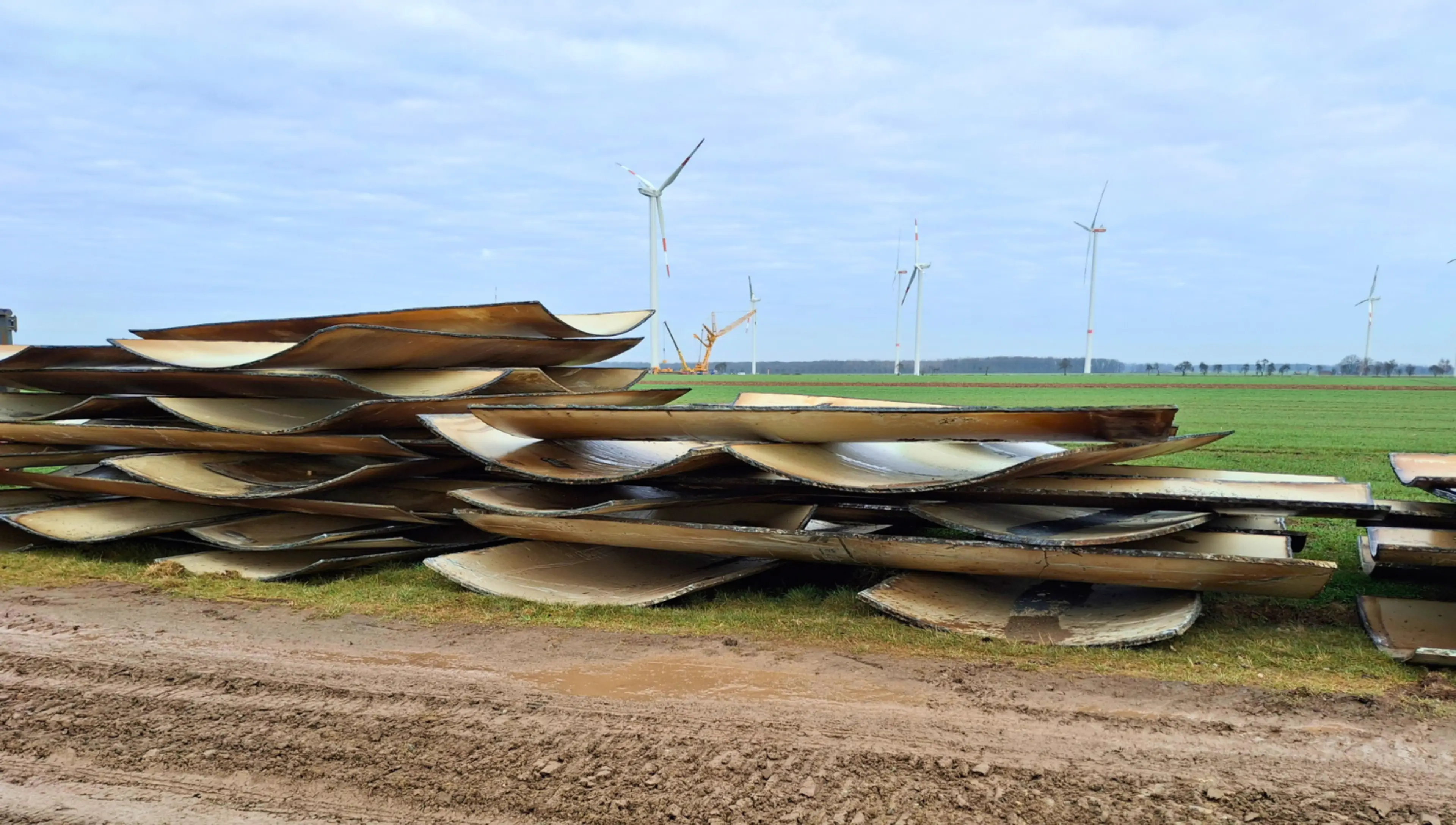
After 24 years of operation and millions upon millions of rotations, it is the end of the road: the rotor blades of the eleven wind turbines in the Fleetmark wind farm are currently being professionally shredded and recycled. A large proportion of the materials will then find a new use in the construction materials industry.
GFRP rotor blades: dismantling with specialist equipment
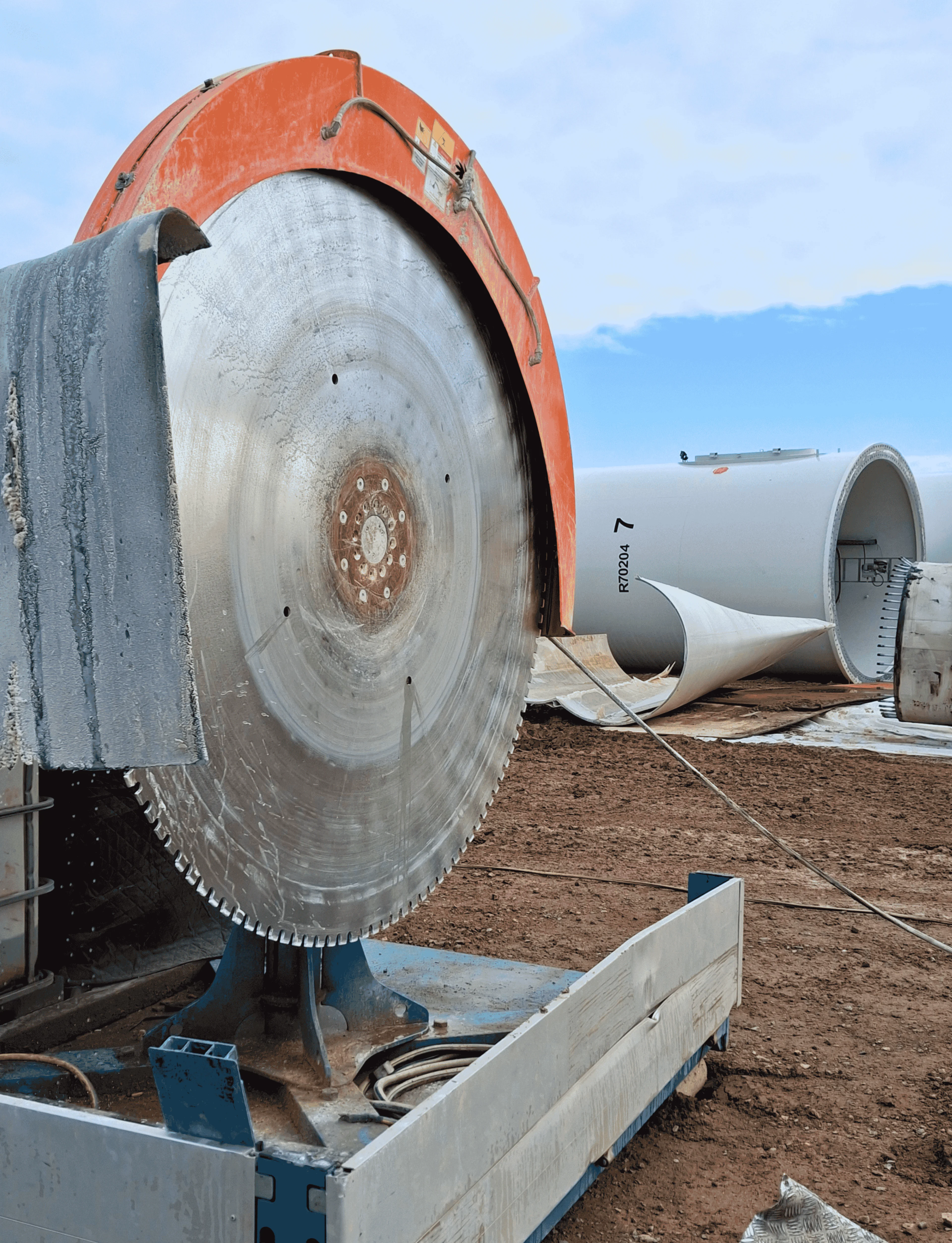
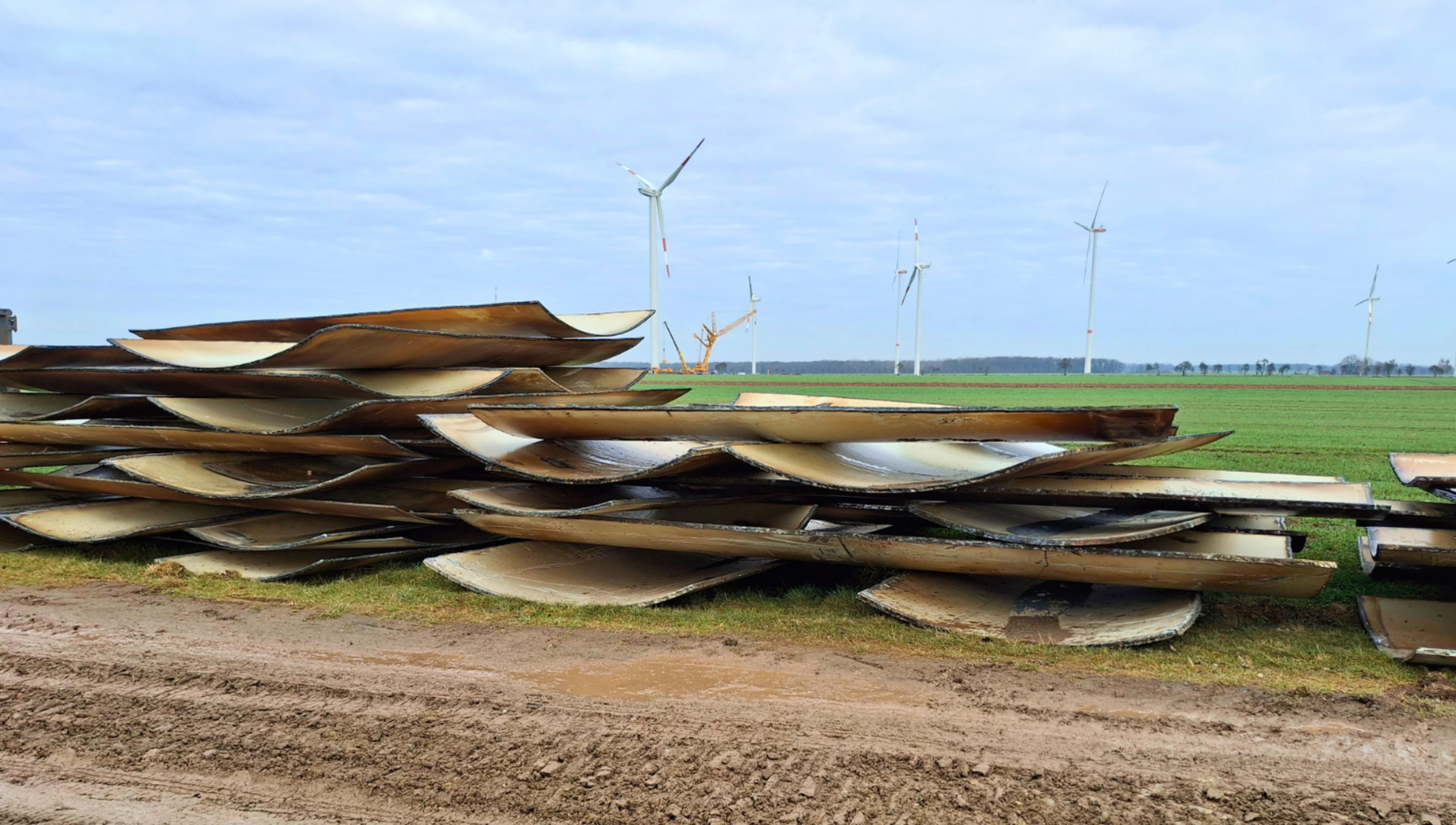
Wind turbine blades are made of particularly durable composite materials such as glass fibre (GFRP), resin and balsa wood. To prepare them for transport, a diamond-tipped circular saw is used during decommissioning. At the Fleetmark wind farm, the 37-metre-long rotor blades are cut into segments around six metres long.
“We are deliberately taking an environmentally friendly approach,” explains Malin Edith Creydt, who is responsible for decommissioning at Prokon. Water is used during the sawing process to bind glass fibre dust. In addition, a special fleece tarpaulin protects the ground from residues. The basis for sustainable decommissioning is DIN SPEC 4866, which defines environmental standards for the dismantling of wind turbines.
Nachhaltiger Rückbau der Windenergieanlagen
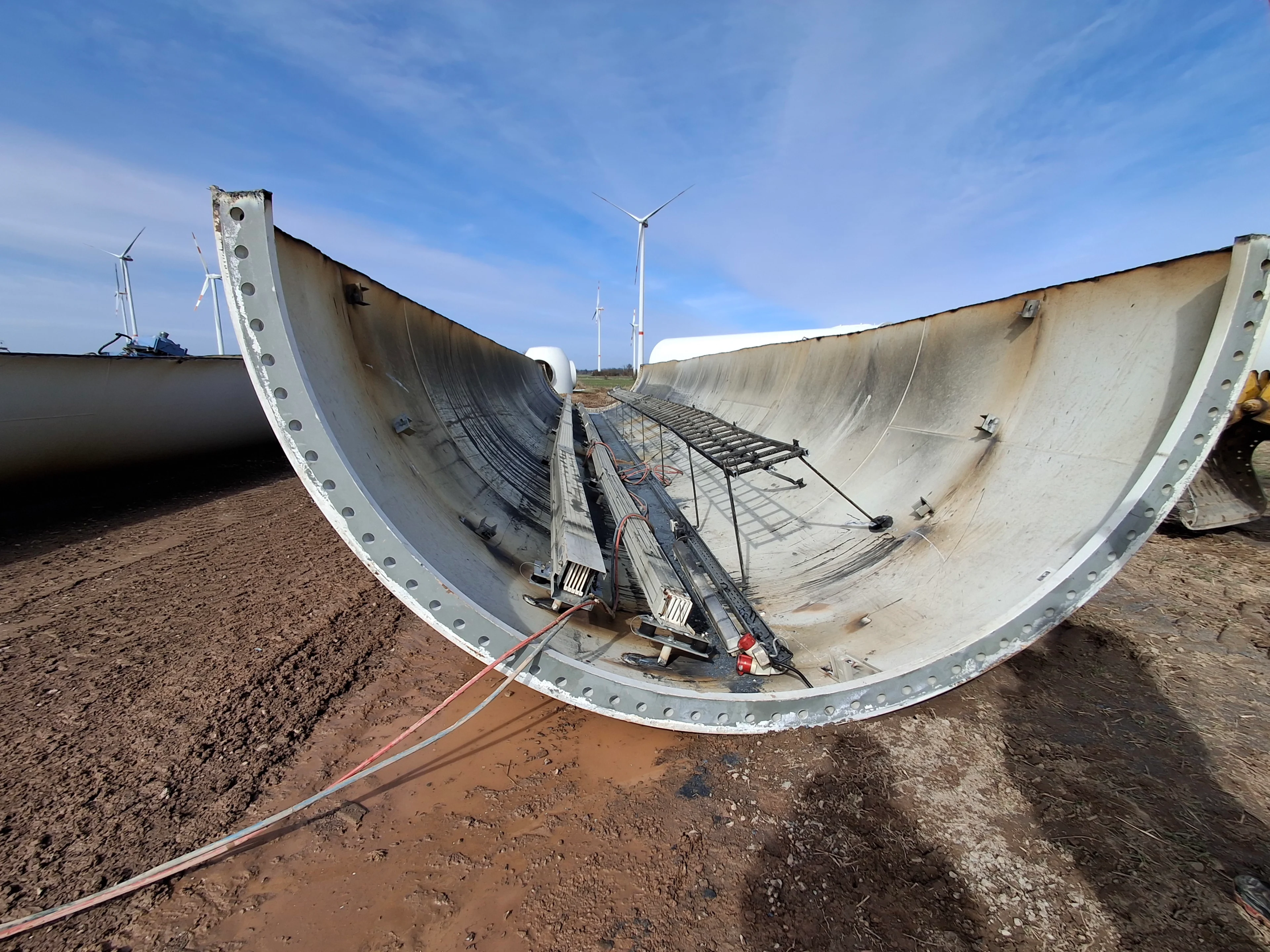
For the dismantling, Prokon works together with the certified decommissioning company Neowa. In parallel with the dismantling of the rotor blades, the steel towers of the wind turbines (picture) are also cut into transportable sections using special oxy-fuel cutting lances.
While steel and copper can be recycled comparatively easily, the rotor blades first have to be further processed. This takes place at specialised waste management companies outside the wind farm. There, the materials are further broken down using hydraulic shears and shredding plants.
“The fibreglass can form sharp-edged fragments. That is why controlled processing is important,” explains Jannik Ott, project manager at Neowa.
Rotor blades become raw material for the cement industry
What many people do not know is that rotor blades have not been allowed to be disposed of in landfill in Germany since 2005. Conventional waste incineration is also regarded as problematic, as fibreglass dust can damage technical equipment.
Prokon therefore relies on material recycling of the materials. The shredded rotor blades are processed into what is known as GRP breakage and then used in the cement industry. In this process, the resin content serves as a fuel, while the glass fibres it contains are used as a substitute for quartz sand in cement.
“This process has become established and corresponds to the current state of sustainable disposal of rotor blades,” says Creydt.
Repowering in the Fleetmark wind farm
The decommissioning of the old installations is part of a comprehensive repowering project in Fleetmark. The existing wind turbines will be replaced by modern and significantly more powerful turbines. This will make it possible to generate more climate-friendly electricity on the same site in future. Learn more about the project: