
Launch of Prokon’s first repowering project
The dismantling of the Fleetmark wind farm in Saxony-Anhalt is in full swing. Since mid-February, eleven wind turbines have been taken down to make way for a repowering project. This process generates a total of around 2,700 tonnes of steel, rotor blades and machine parts, which are being dismantled professionally and recycled as fully as possible.
After more than two decades of operation, the existing turbines are being replaced by eight modern wind turbines. Each of these has a capacity of 6 megawatts and, despite there being fewer of them, will generate around three times the amount of electricity in future. “The towers have reached the end of their service life. We are now clearing the way for a significantly more efficient use of the site,” says Malin Edith Creydt (in the picture), who is responsible for the dismantling at Prokon.
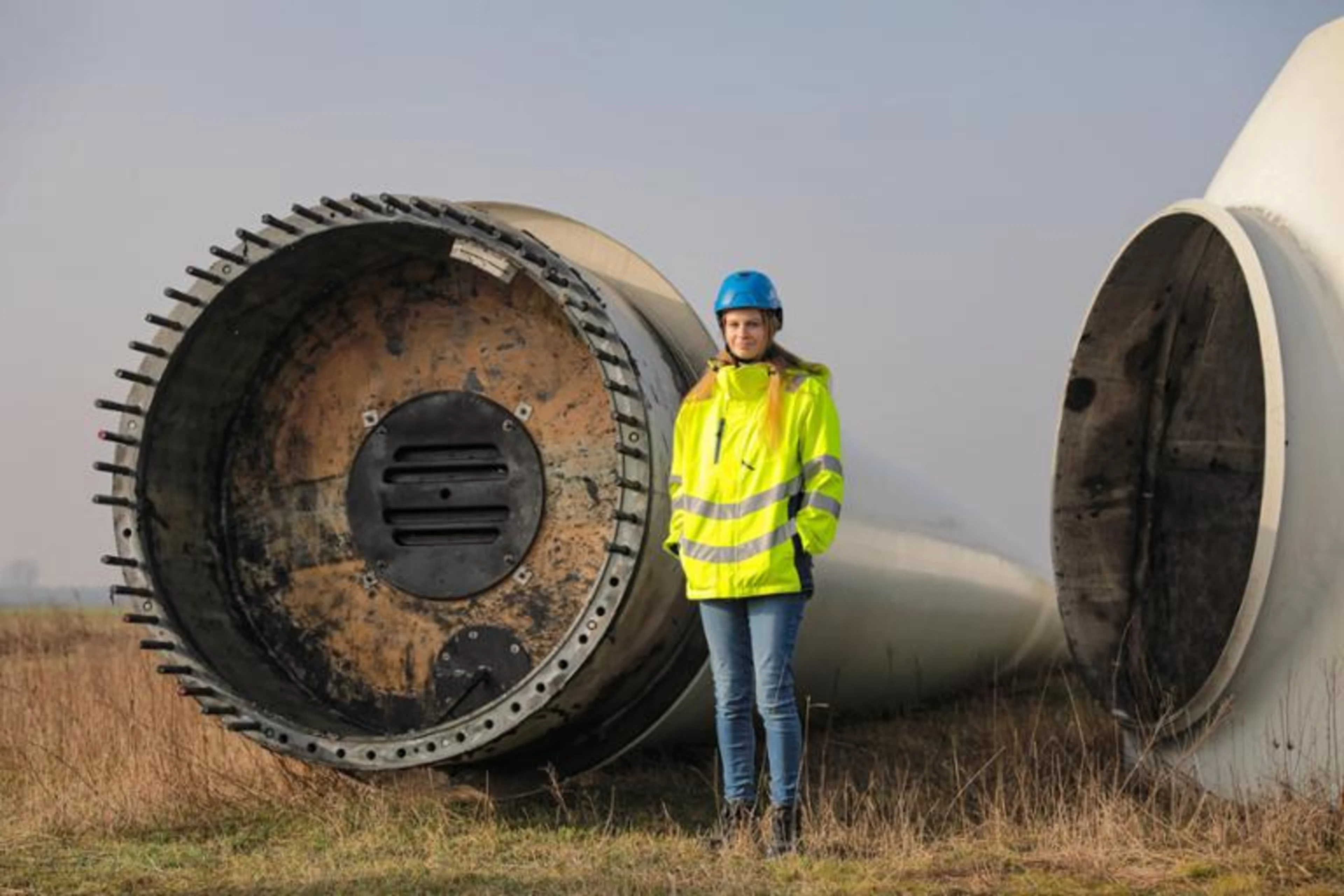
Dismantling wind turbines: Precise dismantling as a team
The dismantling of the wind turbines follows a clearly structured process. First, a team prepares the nacelle: cables, pipes and connections are disconnected, and the drivetrain is removed. A large mobile crane is then brought in to dismantle the central components at a considerable height.
First, the rotor blades are separated from the nacelle and lowered to the ground individually. The components, made of glass-fibre-reinforced plastic and up to 77 metres long, require the utmost precision. An auxiliary crane stabilises the operation. “Precise timing is crucial here – and the weather also plays an important role,” explains Jannik Ott, project manager at the decommissioning company Neowa.
The next step involves dismantling the nacelle, followed by the tower, which is taken apart segment by segment. Each segment is secured with numerous bolted connections – making the dismantling process correspondingly complex.
Recycling during wind farm decommissioning: from old to raw material
If a turbine has been dismantled, the materials are broken down in parallel. The tower is cut into smaller sections on site, and rotor blades are shredded using specialised sawing technology. The aim is to return as many components as possible to the material cycle.
“A special role is played by the recycling of the rotor blades: these are used in cement production as so-called GRP scrap. Owing to their high calorific value and the glass fibres they contain, they can replace fossil fuels and raw materials. ‘The materials are excellently suited for further use,’ says Ott.”


Sustainable deconstruction according to DIN standards
The entire dismantling of the Fleetmark wind farm is being carried out in accordance with DIN SPEC 4866, which defines binding standards for the decommissioning of wind turbines. In doing so, Prokon is deliberately opting for a particularly sustainable and transparent process.
“Our aim is to play a pioneering role in the dismantling of wind turbines,” emphasises Prokon board member Henning von Stechow. The guideline was largely co-developed by the Rückbauverband e.V., of which Prokon is also a member.
Second life for wind turbines and components
A number of the turbines even get a “second life”: two wind turbines from Fleetmark are being sold to Moldova and will continue to be operated there. In addition, many components such as generators or gearboxes can be reused.
As numerous identical turbines are still in operation across Germany, demand for spare parts is high. Accordingly, suitable components are stored and later put back into use.
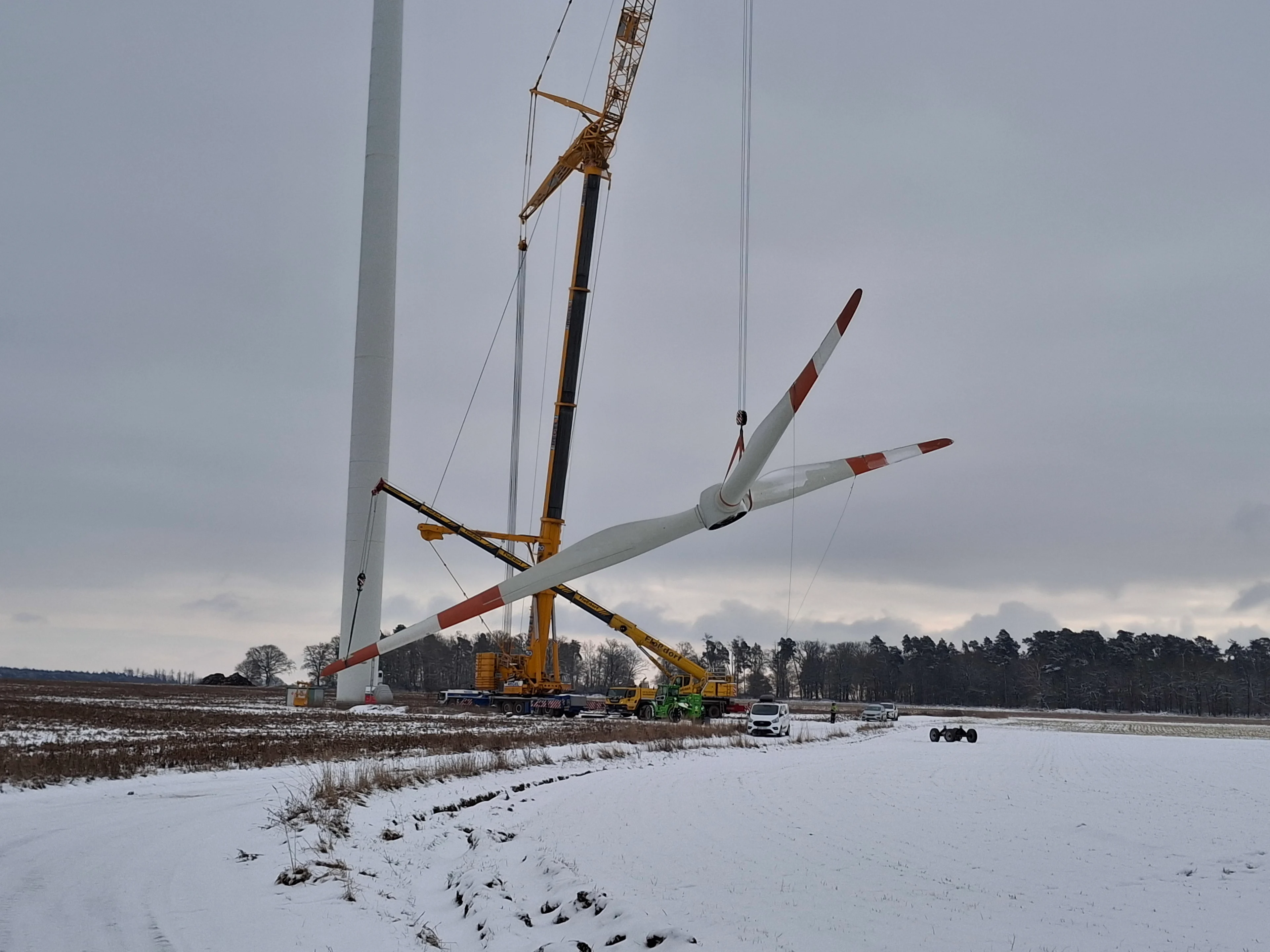

Repowering in Fleetmark: More output with fewer turbines
By July, the dismantling of the wind turbines is due to be completed. This will then be followed by civil engineering work, during which, among other things, the foundations will be removed. Recycling is also a key focus here: for example, the remaining concrete will be reused for the infrastructure of the new wind farm.
The repowering project will create a significantly more powerful wind farm in Fleetmark: instead of the previous 16.5 megawatts, the new turbines will in future deliver around 48 megawatts of capacity. Commissioning is planned for spring 2027.
Would you like to find out more about Prokon’s current projects? We’ve put together some information for you here: