
Wind Power Business WT – the residual power product for all wind farm operators
Every wind turbine (WT) has its own electricity consumption. An uninterrupted power supply is essential during periods of low wind or maintenance work. As a wind farm operator, we have the necessary expertise and, with our residual power product, the right tariff for these situations.
Residual electricity from Prokon – from practice for practice
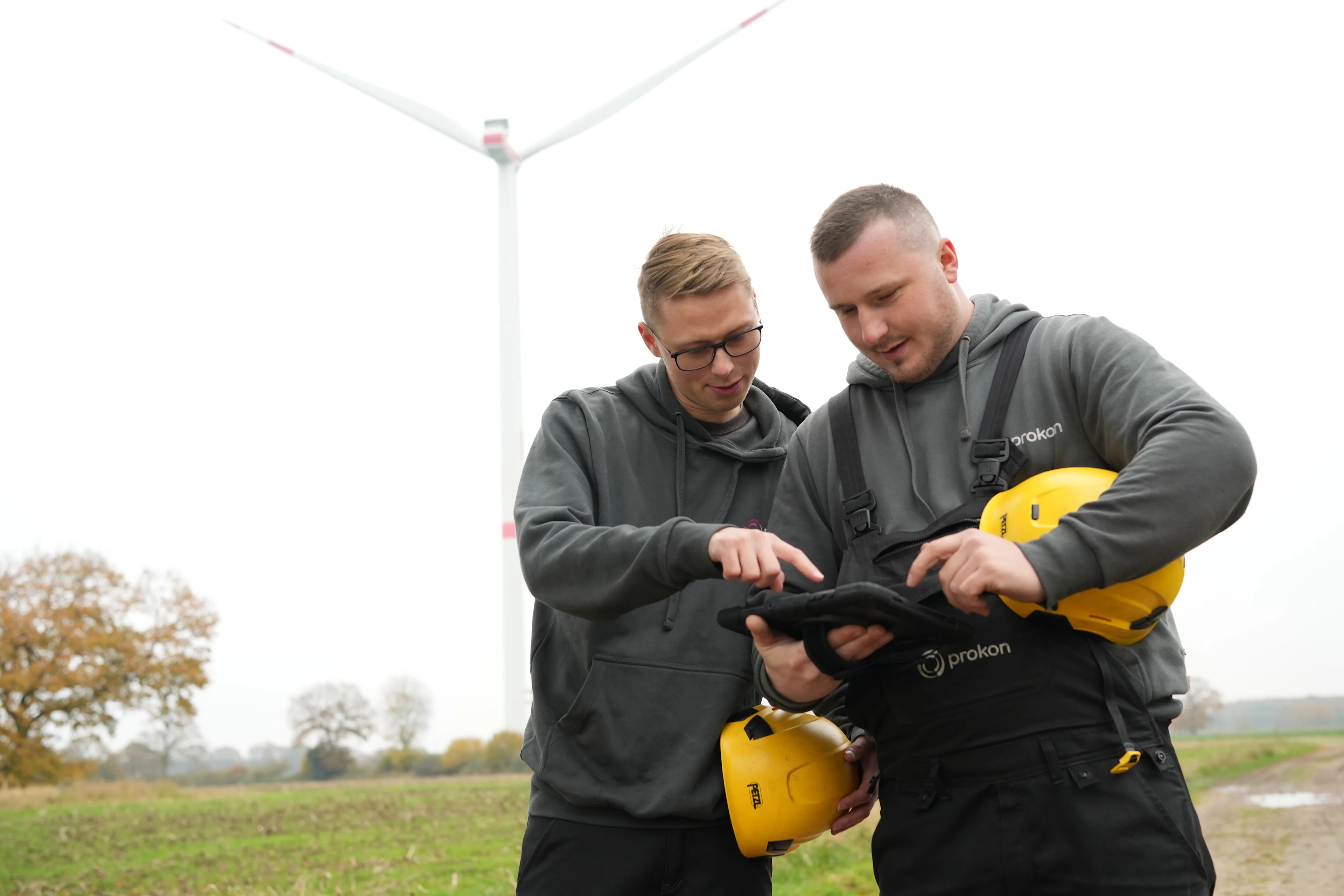
As wind farm operators, we know from our own experience the challenges involved in the day-to-day operation of wind turbines. A wind turbine also needs electricity when it is not producing any itself. In this case, this is referred to as residual electricity or grid supply electricity. We ensure that your turbine is reliably supplied with grid supply electricity at all times.
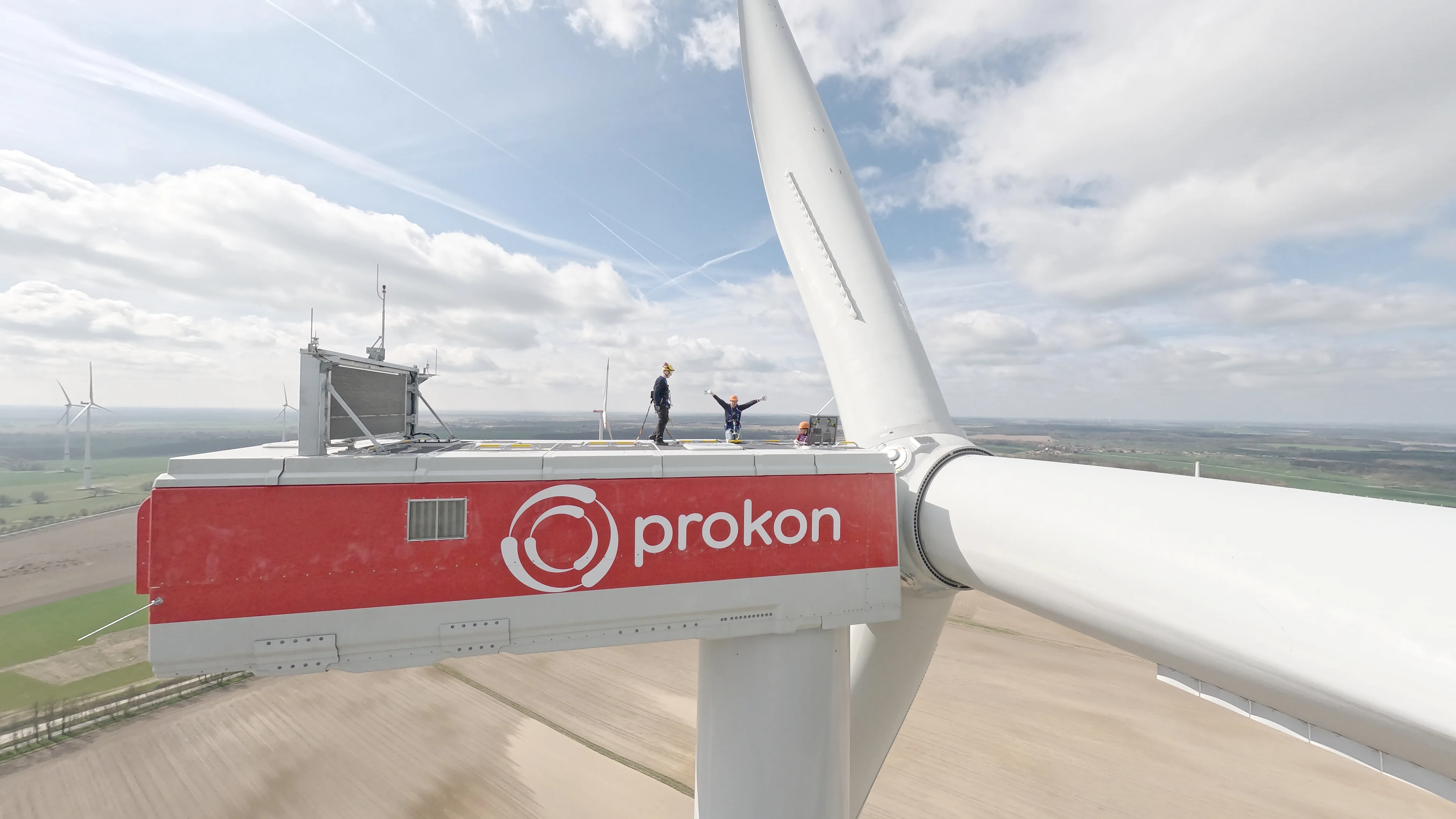
And a wind turbine deserves genuine wind power. With our grid supply electricity model, you receive renewable energy directly from a wind farm operator. This creates a strong partnership within the wind energy sector – practical experience put into practice.
Your benefits with our residual electricity
Tailor-Made and Customised Offer
Depending on the customer’s preference, with fixed or dynamic energy prices.
12-Month Initial Term
Subsequently, the contract is extended automatically, without any additional effort or the need to enter into a new contract.
Electricity from Renewable Energy Sources
Reliable supply of the wind turbine with electricity from our wind farms.
Collaboration on an Equal Footing
Fair terms and a partnership-based collaboration on equal footing.
Achieve more together with the right residual electricity for your wind turbine.
With Prokon, you are choosing an experienced partner who knows the requirements of wind turbines (WTGs) inside out. Benefit from a reliable supply of grid electricity, attractive terms and a strong network within the wind energy industry.
Get your personal quote now and become part of a strong community of wind farm operators.

We will create your personalised offer.
Just let us know how many meters you would like to supply with Prokon wind power and what the expected annual consumption will be. We’ll be happy to get back to you with an offer!
Your contact: Achim Haack
Awarded and Recommended!

Together we are driving the energy transition forward
We produce approx.
0 x
more green electricity than our own customers consume
0
out of 5 stars on Utopia
We have been delivering genuine green electricity to our customers for over
0 years