
A new lease of life for old wind turbine towers – Prokon taps into a new market in pipeline construction
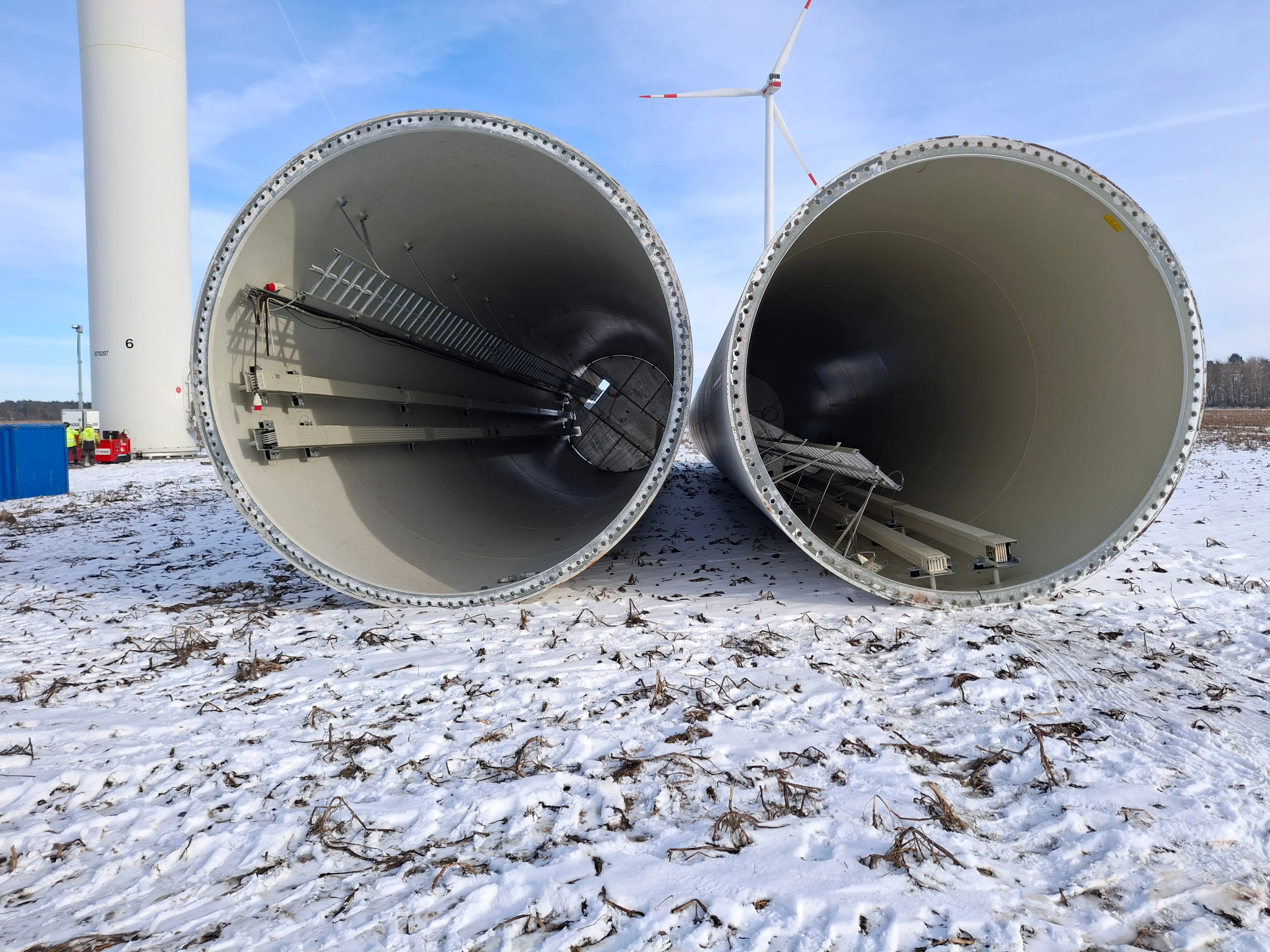
As part of the repowering of the Fleetmark wind farm, the energy cooperative Prokon is breaking new ground in the circular economy: in future, the steel towers produced during decommissioning are to be reused in international pipeline construction – and, in the longer term, even as the basis for citizen-led gas infrastructure.

“The move comes at a time when energy policy debates in Germany and Europe are gaining momentum. Against the backdrop of rising energy prices and geopolitical tensions – particularly around the Strait of Hormuz, through which a significant share of global oil and gas transport passes – the issue of security of supply is coming increasingly into focus.
At the same time, there is intense political debate about the future role of gas-fired power stations. Federal Minister for Economic Affairs Katherina Reiche has recently placed increasing emphasis on the importance of firm capacity and new technologies for energy supply, while criticism is mounting that the expansion of renewables could lose pace.
Against this backdrop, we are now examining whether the cooperative model could also be transferred to new infrastructure: ‘If more gas-fired power stations are needed in future to secure baseload supply, the question arises as to why these should not also be organised in citizen ownership – just like wind farms,’ says Karsten Brandt, Head of Service & Operations Wind Turbines at Prokon eG. ‘Our former wind turbine towers could quite literally form the backbone of such an infrastructure.’
As part of a pilot project, the first tower segments from Fleetmark are to be technically adapted for use in pipelines. In addition to traditional applications in international pipeline construction, use in regional ‘citizen gas networks’ is also being considered.
With this concept, Prokon combines the idea of sensibly reusing existing materials while also rethinking new participation models in energy supply – from wind energy to firm capacity.
Whether this model will prevail is still open for now. However, interest from politics and industry is surprisingly concrete.”